
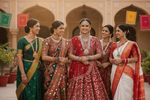
A World of Jewelry Traditions: India, No. 2
23 min reading time
23 min reading time
India's jewelry heritage spans more than 5,000 years and represents one of the world's richest artistic traditions. Across the subcontinent, artisans have transformed gold, silver, pearls, gemstones, enamel, beads, and natural materials into jewelry that expresses spirituality, celebration, identity, and family heritage. From Rajasthan's Kundan and Meenakari to Odisha's silver filigree, Tamil Nadu's temple jewelry, Hyderabad's pearls, Kutch's tribal silver, and the ceremonial beadwork of Northeast India, each region contributes a distinct chapter to India's extraordinary jewelry story.
How Thousands of Years of Craftsmanship Created One of the World's Richest Jewelry Legacies
14 min reading time
India's jewelry heritage spans more than 5,000 years and represents one of the world's richest artistic traditions.
India's jewelry heritage spans more than 5,000 years and represents one of the world's richest artistic traditions. Across the subcontinent, artisans have transformed gold, silver, pearls, gemstones, enamel, beads, and natural materials into jewelry that expresses spirituality, celebration, identity, and family heritage. From Rajasthan's Kundan and Meenakari to Odisha's silver filigree, Tamil Nadu's temple jewelry, Hyderabad's pearls, Kutch's tribal silver, and the ceremonial beadwork of Northeast India, each region contributes a distinct chapter to India's extraordinary jewelry story.
India's jewelry heritage is among the oldest and most diverse in the world. For more than 5,000 years, jewelry has been woven into everyday life; not simply as adornment, but as an expression of identity, spirituality, celebration, and family heritage.
Across the Indian subcontinent, each region has developed its own artistic language, shaped by local materials, royal patronage, religious traditions, and generations of master artisans. Gold has long symbolized prosperity, gemstones have been valued for both their beauty and their meaning coupled with techniques refined centuries ago continue to inspire contemporary jewelers around the world.
Gold, silver, diamonds, pearls, emeralds, rubies, sapphires, kundan-set gemstones
Kundan, Meenakari, Jadau, Temple Jewelry, Tarakasi filigree, Thewa
Hindu, Buddhist, Mughal, Rajput, Persian, Tribal traditions
Rajasthan, Odisha, Tamil Nadu, Telangana, Gujarat & Kutch, Northeast India
Jewelry that celebrates artistry, ceremony, identity, and cultural heritage

India's jewelry traditions reveal very different stories: from Rajasthani gold and gemstones to Odisha's silver filigree and Hyderabad's pearls.
While every artisan and workshop has its own distinctive style, these characteristics provide a helpful starting point for recognizing India's remarkably varied jewelry traditions.
Gold, Polki diamonds, emeralds, rubies, enamel. Kundan, Meenakari and Jadau. Lotus flowers, peacocks, floral vines, Mughal arches — elaborate royal jewelry with colorful enamelwork.
Sterling silver. Tarakasi filigree. Peacocks, flowers, temple chariots, scrollwork — hair-thin strands of silver twisted into lace-like openwork.
Gold, rubies, emeralds. Temple jewelry. Lakshmi, lotus flowers, peacocks, elephants, mango leaves — sculptural jewelry rooted in devotion and classical dance.
Pearls, diamonds, emeralds, gold. Multi-strand pearl craftsmanship. Floral forms and delicate symmetry shaped by Hyderabad's trading history and the Nizams' patronage.
Silver, beads, mirrored elements. Tribal silver craftsmanship. Geometric engraving, protective symbols, mirrors — bold jewelry connected to community and textile traditions.
Beads, brass, shells, silver, seeds, natural fibers. Hand-strung ceremonial beadwork. Mountains, wildlife, ancestral symbols — materials that communicate ancestry and ceremony.
Royal Splendor in Gold and Gemstones


Rajasthan has long been regarded as one of India's great jewelry capitals. The royal courts of Jaipur fostered generations of artisans whose mastery of gemstones and enameling became legendary.
Among the region's defining techniques is Kundan, in which highly refined gold is used to set gemstones without visible prongs, allowing light to flow naturally through the design. Many Kundan pieces are paired with Meenakari, vibrant enamel decoration applied to the reverse, creating jewelry that is as beautiful on the back as it is on the front.
The region is also celebrated for Polki jewelry, featuring uncut natural diamonds that preserve the stone's organic beauty.
Rajasthan reminds us that true artistry rewards a closer look — sometimes the hidden side of a piece is every bit as extraordinary as the one first seen.
Silver Woven Like Lace
In eastern India, the city of Cuttack is renowned for Tarakasi, one of the world's finest silver filigree traditions. Artisans patiently twist delicate strands of silver into intricate openwork inspired by flowers, birds, temples, and stories from Indian mythology. Some pieces require weeks, or even months, to complete.
Odisha reminds us that extraordinary craftsmanship is often measured in patience rather than scale.


Jewelry Inspired by the Divine


Temple jewelry traces its origins to the adornment of Hindu deities before its close association with Bharatanatyam dancers and ceremonial celebrations. Richly sculpted in gold, these pieces often feature Lakshmi, lotus blossoms, peacocks, elephants, and sacred symbols that reflect India's enduring spiritual traditions.
Tamil Nadu reminds us that jewelry can be both an artistic expression and a symbol of devotion.
The Elegance of Pearls
For centuries, Hyderabad has been known as the City of Pearls, where international trade and royal patronage created a distinctive jewelry tradition celebrated for elegance and refinement.
The Nizams' appreciation for pearls helped establish Hyderabad as one of the world's great pearl centers, where artisans combined lustrous pearls with gemstones such as diamonds and emeralds in finely worked gold.
Telangana reminds us that simplicity and refinement often leave the most lasting impression.

Jewelry Worn as Identity


Across Gujarat, particularly in the Kutch region, jewelry has long reflected community, identity, and everyday life.
Rabari, Ahir, and other communities developed bold silver jewelry to complement the region's extraordinary textile traditions. Large cuffs, anklets, necklaces, and earrings became symbols of heritage, resilience, and personal expression.
Gujarat reminds us that jewelry and textiles often tell the same cultural story through different artistic forms.
Nature, Community, and Storytelling
The diverse communities of Northeast India created jewelry traditions unlike any other in the country. Using beads, brass, shells, seeds, silver, and woven fibers, artisans craft pieces that express identity, social status, ceremony, and connection to the natural world.
The Northeast reminds us that beauty is often found in the stories that materials carry.

Although each region has developed its own artistic language, several themes unite India's jewelry traditions.
Pieces are often passed from one generation to the next, carrying family history and cultural memory.
Colors, gemstones, and motifs frequently express blessings, prosperity, devotion, or protection.
Many techniques continue to be preserved by artisan families through generations of apprenticeship.
Every region contributes its own artistic voice while enriching India's remarkable jewelry heritage.
India's regional jewelry traditions can often be recognized through their materials, colors, motifs, and methods of construction. Although individual designs vary widely, this guide offers a starting point for understanding the distinctive artistic language associated with each region. These traditions cannot be reduced to a single design or material, but viewed together, they reveal how geography, spirituality, royal patronage, community, and local resources shaped India's remarkably diverse jewelry heritage.
Every piece of jewelry begins long before it reaches the person who wears it.
In India, jewelry tells stories of faith, celebration, family, and identity. Whether created for a royal court, a temple ceremony, a village celebration, or everyday life, each tradition reflects the values and artistry of the communities that shaped it.
At Sundara Joon, this is why we believe jewelry is more than an accessory. It connects culture to craftsmanship, and the artisans who preserve these traditions with remarkable skill and creativity.
Our hope is that this series encourages you to look beyond the surface of the jewelry you encounter. Whether it comes from India or another corner of the world, jewelry becomes even more meaningful when we understand the history, symbolism, and human hands that brought it to life.
Because when we appreciate the craft, we honor the culture that created it.
India's jewelry traditions are deeply connected to the country's history, spirituality, and regional cultures. If this article sparked your curiosity, these trusted resources offer an opportunity to explore further.
Discover the silver traditions of Taxco, the artistry of Indigenous communities, and the vibrant cultural influences that continue to shape Mexican jewelry today.


