
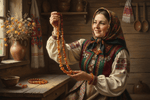
Amber: Meaning, History, Colors & Jewelry Care
19 min reading time
19 min reading time
Amber is fossilized tree resin, an organic gem shaped over millions of years. Explore how it forms, why its colors vary, what it has meant across history, and how to care for amber jewelry.
Amber is not a mineral. It is fossilized tree resin: a lightweight organic gem whose colors, warmth, and occasional inclusions connect a piece of jewelry to ancient forests. People have gathered, carved, worn, and traded amber for thousands of years. Its appeal comes from both its beauty and its unusual story.
At Sundara Joon, amber’s honey, cognac, and golden-brown tones bring warmth and individuality to handcrafted designs. No two pieces have precisely the same color, clarity, or pattern, so the material itself becomes part of each design’s character.

Amber is fossilized tree resin, an organic gem rather than a mineral. Resin released by trees can harden and become buried in sediment. Over long periods, chemical and physical changes transform some resin into amber. The process depends on the original resin and the conditions in which it was buried.
Amber is found in deposits around the world, and its age varies widely. Baltic amber, the best-known source in the jewelry trade, is generally dated to the late Eocene, roughly 34 to 38 million years ago. Other amber deposits are older or younger. The word copal is often used for younger, less fully fossilized resin, though the boundary between copal and amber is not always applied consistently.
Because amber is organic, it has qualities that distinguish it from mineral gemstones: it is very light, relatively soft, and can be affected by heat, light, and chemicals.
Amber ranges from pale yellow and honey to orange, cognac, reddish brown, and nearly opaque white. Rare specimens can appear greenish or blue, but those colors need context: green amber may be treated, and blue fluorescence is especially associated with some Dominican amber under particular lighting. Heat treatment and dyeing can also alter color or appearance, so a seller’s description sheds light when color treatment is relevant.
| Appearance | What to Know |
|---|---|
| Honey and golden yellow | Familiar warm tones, ranging from pale and transparent to deep and cloudy |
| Cognac and orange | Richer amber shades that can look especially luminous in warm light |
| Reddish brown | Can occur naturally and may also develop as amber oxidizes over time |
| White or cloudy | Often opaque because of many tiny bubbles within the material |
| Greenish | May be natural or produced or enhanced through treatment; ask about the specific piece |
| Blue fluorescence | Uncommon; some Dominican amber fluoresces blue under ultraviolet light |
Inclusions can add visual interest, but they are not present in every piece. Tiny plant fragments, air bubbles, or other material may create depth and variation.
Amber is not one single age or deposit. Some amber dates back tens of millions of years; other material is considerably older or younger. Baltic amber commonly used in jewelry formed in the late Eocene, roughly 34 to 38 million years ago, while the oldest known amber is much older.
The age and geological origin matter because amber from different deposits can vary in color, chemistry, inclusions, and trade history. A broad statement such as “amber is 100 million years old” may describe a particular specimen or deposit, but it is not a reliable age for all amber.
Amber is not one of the standard modern birthstones. November’s recognized birthstones are topaz and citrine. Amber is sometimes offered as an alternative in jewelry or associated with zodiac and folk traditions, but those associations vary by source.
Choose amber for a November birthday—or any occasion—if its color, history, or personal meaning appeals to you. A gift with an informal birthstone designation may feel more personal.
Amber’s distinctive appearance and ability to hold static charge when rubbed helped make it remarkable to people long before modern science. Ancient Greek writers used the word elektron for amber; the modern word electricity ultimately derives from that Greek term.
Archaeological evidence shows amber moving over long distances in prehistoric and ancient trade. Baltic amber reached communities far from its northern sources, including Mediterranean regions. The routes were networks of exchange rather than one fixed road. Later, Roman writers described amber trade between northern Europe and the Mediterranean; the phrase Amber Road is now commonly used for the routes that carried it south.
Amber was carved into beads, pendants, and other objects, and it appears in many cultural settings. Its meaning was never identical everywhere. Some people valued its color and rarity; others connected it with protection, vitality, ancestry, or spiritual practice. Those beliefs belong to particular times and communities.
| Historical Connection | What the Evidence Suggests |
|---|---|
| Ancient Greece | Amber’s static charge when rubbed was noted in ancient writing; elektron became the root of the word “electricity.” |
| Prehistoric and Bronze Age exchange | Amber traveled far from its sources, appearing in archaeological contexts across Europe and the Mediterranean. |
| Roman trade | Baltic amber was prized and moved through exchange networks linking northern Europe with the Mediterranean. |
| Carving traditions | Amber’s warm color, translucence, and workability made it suitable for beads, pendants, and small carved objects in different regions. |
The historical record is richer than a list of legends: amber offers evidence of craft, movement, exchange, and changing tastes across generations.

Amber is often associated in contemporary jewelry writing with warmth, sunlight, memory, endurance, and transformation. A particular community, historical object, or spiritual practice may give amber a more specific meaning, while an individual wearer may connect it to a person, place, or moment in their own life.
Its physical history gives these associations an intuitive starting point: resin from a living tree changed over geological time and sometimes preserved traces of ancient environments. Still, symbolism is most meaningful when it is grounded in a specific tradition or in the wearer’s own story.
Amber measures about 2 to 2.5 on the Mohs hardness scale, so it easily scratches compared to most mineral gemstones. It also has limited toughness and can be damaged by impact, heat, prolonged exposure to light, or chemicals. That makes it better suited to designs where it is protected from repeated knocks and abrasion.
Pendants, necklaces, earrings, and brooches can be good choices when worn with care. A ring or bracelet may be more exposed to bumps, surfaces, and everyday wear. If you choose amber for a frequently worn piece, consider how the setting protects it and remove it before work or activities that could strike or scratch it.
Amber needs gentle handling. To clean it, use lukewarm water with a small amount of mild soap and a soft cloth; dry it carefully. Avoid ultrasonic and steam cleaners, solvents, alcohol, perfume, household cleaners, and abrasive polishing products. Do not apply olive oil or other oils to restore shine: oil treatments can alter or damage amber.
A soft, clean cloth and careful storage are usually all an amber piece needs.
Amber is easy to love for its color.
Its story makes it harder to forget.
It began as resin from a living tree, in a forest that no longer exists.
Over millions of years it slowly changed into something new.
Much later, people gathered it from northern sources, carried it south through networks of exchange, carved it into beads and pendants, and gave it meanings of their own.
Hold a piece to the light and you may see honey, cognac, or a soft cloud of tiny bubbles.
Today, an artist chooses a piece for its honey or cognac glow and decides what it should become.
Amber holds time in a way few materials can.
Wearing it adds one more chapter.
Sundara Joon’s amber designs show how a single material can feel different depending on shape, scale, and arrangement. A pendant can let a larger piece of amber take focus; beads can create a warm, flowing line; tiered earrings add movement while keeping the material light to wear.

Shop the Earth Tone Amber Beaded Pendant Statement Necklace →

Shop the Step Function Amber Necklace →

Shop the Multi-tiered Amber Beaded Drop Earrings →
Amber’s variations in tone and translucence mean that each design has its own visual character. Explore Sundara Joon’s amber jewelry and choose the piece whose color and form feel right to you.


