Jade – a gemstone made of two
11 min reading time
11 min reading time
Discover the beauty, meaning, and history of jade — the revered gemstone of heaven, eternity, and virtue. Learn about nephrite vs. jadeite, cultural symbolism, and how to care for jade jewelry. Sundara Joon
Discover the beauty, meaning, and history of jade — the revered gemstone of heaven, eternity, and virtue. Learn about nephrite vs. jadeite, cultural symbolism, and how to care for jade jewelry.

Jade Floral Bouquet Cocktail Ring
Jade is not a single gemstone but a name that refers to two distinct minerals: nephrite and jadeite. Though visually similar, they differ in chemical composition, origins, and crystalline structure. For thousands of years, civilizations used nephrite without knowing jadeite existed. It wasn’t until 1863 that French mineralogist, Alexis Damour, confirmed the two-stone identity long recognized by Chinese artisans.

| Feature | Nephrite | Jadeite |
|---|---|---|
| Mineral Type | Calcium magnesium-rich amphibole | Sodium aluminum-rich pyroxene |
| Hardness | ~6–6.5 Mohs | ~6.5–7 Mohs |
| Toughness | Exceptionally tough | Slightly harder but more brittle |
| Crystal Structure | Dense, interlocking fibers | Granular structure |
| Typical Colors | Green, white, black, brown, gray | Imperial green, lavender, white, blue, pink, black |
| Historical Use | Ancient China, Māori, indigenous cultures | Highly prized Burmese jade in imperial China |
Nephrite is renowned for its extraordinary toughness, making it ideal for intricate carvings. Jadeite, particularly the vivid green variety known as “Imperial Jade,” is more translucent and commands the highest prices in fine jewelry.

Nephrite Sources:
China – Historically significant, especially in ancient dynasties
New Zealand (Pounamu) – Sacred to the Māori
Canada (British Columbia) – Major modern source
Russia (Sayan Mountains)
USA (Wyoming & California)
Jadeite Sources:
Myanmar (Burma) – Home of the world’s finest Imperial Jade
Guatemala – Used in ancient Mesoamerican cultures
Japan (Itoigawa)
Russia & Kazakhstan

Jade’s color palette is more varied than many realize:
| Nephrite Colors | Jadeite Colors |
|---|---|
| Pale to deep green | Imperial (emerald-like) green |
| White (“mutton fat” jade) | Lavender/purple |
| Black (dark green) | Blue or icy white |
| Brown/yellow (iron oxide) | Pink or red (manganese) |
| Gray | Rare: intense red or orange |
Color, translucency, and texture significantly influence value.

The rainbow of colors that are jade
Jade is evaluated on:
- Color – Even saturation and vibrancy
- Transparency – Fine jadeite can be semi-translucent
- Texture – The best jade feels smooth, almost “buttery”
- Clarity – Fewer inclusions increase value
- Craftsmanship – Carving skill greatly affects desirability
Imperial jadeite is considered the most precious variety, often surpassing diamonds in price.

Jade Carved Pendant with Lacy Pattern
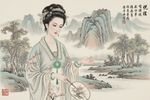
In China, jade (玉 yù) has been cherished for over 8,000 years and is considered the “Stone of Heaven.” Confucius linked jade to five virtues:
| Jade Quality | Confucian Virtue |
|---|---|
| Warm luster | Benevolence |
| Translucency | Righteousness |
| Resonant sound | Wisdom |
| Durability | Courage |
| Purity | Integrity |
Jade was believed to connect the earthly and spiritual realms and protect the body after death — emperors were even buried in jade suits.
Māori (New Zealand):
The Māori of New Zealand consider nephrite jade (pounamu) a treasure (taonga) with its own life force (mauri). Different types of pounamu have distinct names and uses:

Maya and Aztecs (Mesoamerica):
The Maya, Olmec, and Aztec civilizations highly valued jadeite, associating it with life-breath and fertility. Jade objects were treasured possessions of royalty and used in religious ceremonies. When Spanish conquistadors arrived, they were puzzled that these civilizations valued jade above gold.
Modern beliefs:
Jade is associated with harmony, wisdom, protection, prosperity, and emotional balance.

Jade and Pearl Pendant Necklace

Jade serves as a birthstone for both March and August in various traditions.
Yes. In feng shui, jade enhances life energy and balance. Each jade color carries meaning:
| Color | Symbolism | Element |
|---|---|---|
| Green | Growth, vitality, renewal | Wood |
| White | Purity, clarity | Metal |
| Black | Protection, grounding | Water |
| Red | Passion, celebration | Fire |
| Yellow | Stability, nourishment | Earth |
For jade enthusiasts, visiting one of the world's great jade markets offers an unforgettable cultural experience:
When shopping at these markets, bargaining is expected—prices are typically set high with the assumption that negotiation will follow. Bringing a knowledgeable guide can be invaluable, as distinguishing quality jade from imitations requires considerable expertise.

Despite their toughness, jade pieces deserve proper care to maintain their beauty for generations:

At Sundara Joon, our collection showcases the timeless allure of jade in both traditional and contemporary designs. Our artisans draw inspiration from jade's rich heritage while creating pieces suited to modern aesthetics.
Whether you're drawn to the imperial green of fine jadeite or the subtler tones of classic nephrite, jade jewelry makes a meaningful addition to any collection; connecting the wearer to thousands of years of human appreciation for this remarkable stone.
For simplicity, Sundara Joon refers to nephrite as jade and identifies jadeite pieces as such. Both are genuine jade, with their own unique characteristics and beauty.
By supporting our artists, we contribute economically and provide essential business education, helping them thrive sustainably while producing exceptional work.


