
Intoxicating Labradorite
6 min reading time
6 min reading time
Discover labradorite, the gemstone of light and transformation known for its aurora-like flashes. Learn its origins, meaning, cultural legends, care tips, and jewelry appeal.
Discover labradorite, the gemstone of light and transformation known for its aurora-like flashes. Learn its origins, meaning, cultural legends, care tips, and jewelry appeal.
Labradorite is known for labradorescence — a mesmerizing display of blues, greens, golds, purples, and sometimes reds that appear to glow from within the stone. As light moves across its surface, vivid flashes ignite like captured lightning or northern lights beneath the surface, giving labradorite its legendary mystique.
The phenomenon comes from microscopic, layered structures within the stone. As light enters, it bends and reflects off these internal layers, causing different wavelengths to interfere with one another. Some colors cancel out, while others intensify producing the stone’s signature iridescent “flash.” This effect is known scientifically as the Schiller effect or optical interference on thin films, similar to the color play in soap bubbles and peacock feathers.

Labradorite was first recorded in 1770 on Paul’s Island near Nain in Labrador, Canada, from which it takes its name. European missionaries documented it, but the Inuit people had already revered it, believing it held the trapped light of the northern aurora.
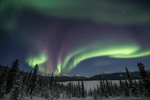
According to Inuit legend, the northern lights were once imprisoned within stone along the Labrador coastline. A warrior struck the rock with his spear, freeing most of the lights to dance in the sky — but some remained within the stone, becoming labradorite.
This belief still echoes today in how many view the stone: as a reminder of mystery, transformation, and unseen energy.
While Labrador, Canada, remains an iconic source, labradorite is now found in several regions globally, each offering unique characteristics:
Madagascar – Highly prized for vibrant blue and multicolor flashes
Finland (Spectrolite) – A rare, intensely colored variety displaying a broad spectrum
Russia & Ukraine – Known for dramatic color play
Norway – One of the earliest explored deposits
United States (Oregon, New York) – Produces fine jewelry-grade material
Australia, Mexico, Poland, China – Additional notable deposits
Depending on the stone, labradorite can reveal:
💙 Electric blue
💚 Emerald green
💛 Golden or coppery yellow
🧡 Fiery orange
💜 Rich purple
🌫 Silvery gray
❤️ (Rare) deep red or pink tones
High-quality stones may show multiple colors at once, creating a rainbow-like aurora effect that shifts with movement.
The best specimens display multiple colors across their surface, creating a mesmerizing effect as the stone is moved. This color play isn't just on the surface as it appears to come from deep within the stone itself, adding to its mystical quality.
Labradorite is often celebrated as a stone of:
| Symbolic Theme | Meaning |
|---|---|
| Transformation | Associated with personal growth and change |
| Intuition | Believed to awaken inner wisdom |
| Protection | Seen as a shield against negativity |
| Creativity | Favored by artists to spark inspiration |
| Mysticism | Linked to spiritual awareness and cosmic energy |
In metaphysical traditions, it is thought to connect with the third eye and crown chakras, promoting clarity and insight.
Labradorite measures 6 to 6.5 on the Mohs hardness scale, making it moderately durable. It is suitable for daily wear in pendants and earrings, and for rings if set securely.
Best jewelry applications include earrings, pendants, cabochon rings (with protective settings), and statement cuffs (light wear)
It is often cut into cabochons to best display its color flash, though faceted labradorite also creates a striking effect.

Labradorite pairs beautifully with both cool metals such as sterling silver, white gold, and platinum, as well as warm metals when contrast is desired — especially when golden or copper flashes appear in the stone.
Labradorite is a storyteller. No two pieces are ever the same as each stone ignites differently when light moves across its surface, making it ideal for handcrafted jewelry that celebrates individuality, mystery, and natural wonder.

To maintain labradorite’s beauty:
- Clean with a soft cloth and mild soap/water (avoid soaking)
- Avoid ultrasonic or steam cleaners
- Remove before high-impact activities
- Store separately to prevent scratches from harder gemstones
- Avoid long exposure to direct sunlight or extreme heat

Labradorite Ladder Like Earrings
At Sundara Joon, our curated labradorite collection is designed to honor the stone’s ethereal light. Each handcrafted piece reveals flashes of color like hidden worlds, offering wearable enchantment for those drawn to transformation, imagination, and inner strength.
Explore our Labradorite jewelry — where light meets legend.


